
work that follows the rhythm of the seasons
The vineyard
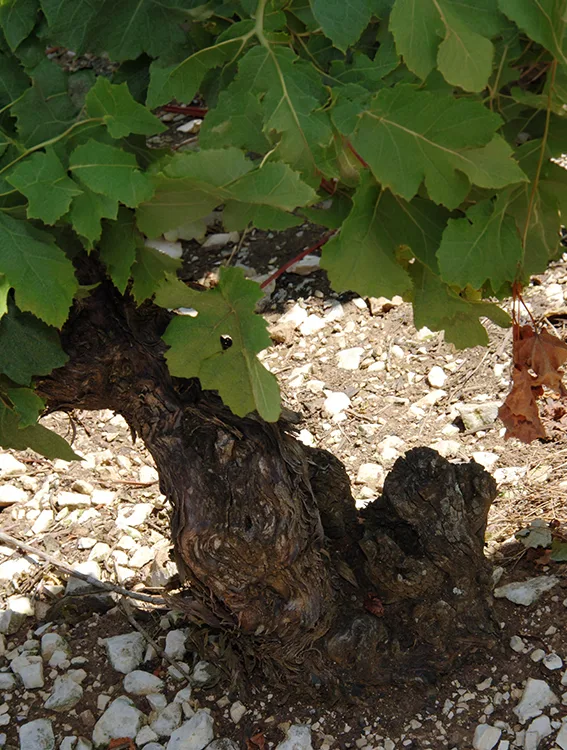
Winter is largely devoted to pruning, an essential step in preparing for the next harvest. Equipped with electric pruning shears and a suitable work seat, we prioritise precise movements whilst ensuring our comfort and health. This equipment also comes in handy for other manual tasks, such as lowering and raising the vines. Pruning is carried out exclusively using the single Guyot method to ensure control over both quality and quantity.
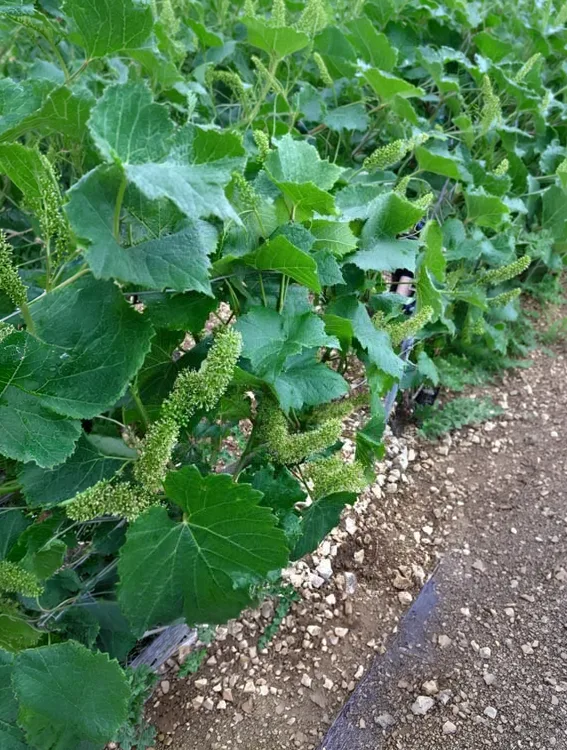
Around June, the blossoming heralds the start of a new phase. For around a hundred days, we closely monitor the development of the grapes, keeping pace with the weather and the vines’ needs.
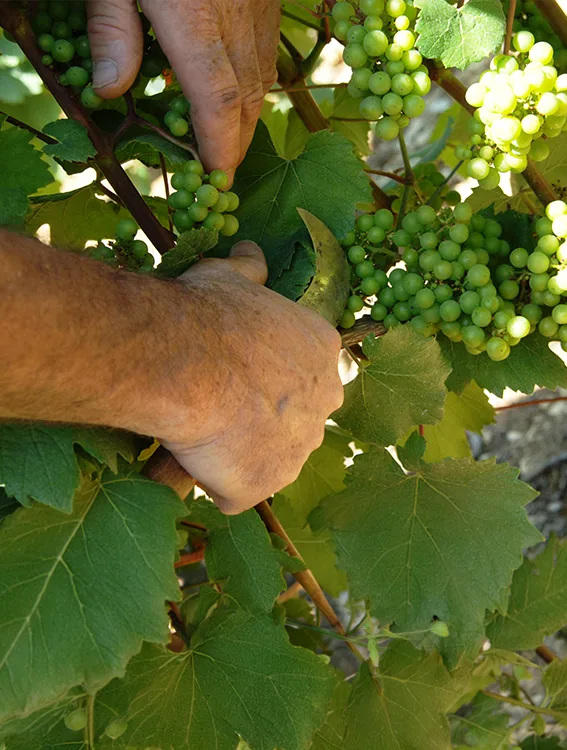
As the grape harvest approaches, usually in September, we carry out ripeness checks to help us decide when to harvest. The work then continues in the cellar, where our expertise comes into play to bring out the character of each cuvée.
Wine-making
After tending our vines all summer, it is now time for the grape harvest. We have been harvesting mechanically since 1985. Marine operates the machine, whilst Claire manages the winery. Once harvested, the grapes are transported in stainless-steel bins to a pneumatic press. Laurence and Claire ensure that everything runs smoothly in the cellar.
The pressed juice flows directly into the receiving vats. Once the sediment has settled, our various wines are transferred to temperature-controlled stainless-steel vats. This enables us to maintain precise temperature control.
A few days after harvest, alcoholic fermentation (the conversion of sugar into alcohol) will begin. We monitor this fermentation very closely by carrying out regular density and temperature checks in the morning and evening. This can last a few days or, for some vintages, several weeks.
A second fermentation then takes place. This is malolactic fermentation (the conversion of malic acid into lactic acid). This fermentation lasts several weeks, during which the temperature is monitored regularly. This process results in wines that are smoother and fuller-bodied. It is an essential stage in winemaking.
The ageing process will last around 9 to 10 months, during which time the wine will be fined, chilled, filtered and then bottled. Sales can then begin.
The cellar
We began selling our bottled wine in 1979, producing around 2,000 bottles a year. Today we produce between 50,000 and 150,000 bottles, depending on the vintage, 75 per cent of which are sold overseas.
Our wines are available in various European countries: England, Scotland, the Netherlands, Belgium, Italy, Brazil, the United States and Australia.
From harvest to bottling, we carry out all the processes ourselves, such as filtration, bottling and labelling.
From the cellar to the bottle
Filtration, bottling and labelling: we carry out every stage on the estate, building on the work done in the vineyard and during winemaking.
A story to share
Over the generations, this business has grown, whilst retaining its family-run character.
Around the world’s dining tables
A way of sharing our expertise and the flavours of our local regions beyond Chablis.